
Under EPCOR's rules, you own the water service from the property line to the meter, and EPCOR owns the meter itself. A leak on that buried stretch often shows up as a sudden pressure drop or damp concrete near the meter. Older service lines here are lead or copper, and newer ones are shielded plastic. When a buried line fails, a water line replacement often uses a water line pull, a trenchless method that draws new line along the old route without trenching the whole yard.
Inside the house, the material tells us where to look first. Water lines installed before 1980 in Edmonton were generally copper or galvanized steel. Copper develops pinholes from corrosion over time. Galvanized steel rusts from the inside while sediment builds up, until a joint finally lets go. New work is almost exclusively PEX. If you've still got grey Poly-B, the tubing tends to fail without warning, and Poly-B pipe replacement beats patching it over and over.
Condensation fools people all the time. Cold water lines sweat in a humid summer basement, and the drips land on joists and look exactly like a leak. We sort out sweat from a true failure before recommending water line repair or any other fix.
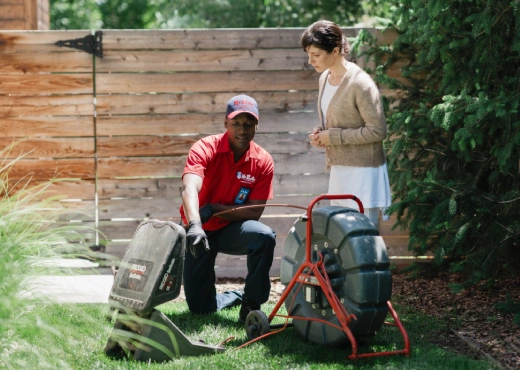
Winter adds its own problem. Cold snaps below -30°C hit Edmonton most years, and a water line along an exterior wall splits when it freezes, then stays quiet until the ice melts. Our thermal camera finds those split sections quickly. Drain lines are a separate job: ABS and PVC drains leak at joints and cleanouts, and we trace those with a plumbing video camera inspection.