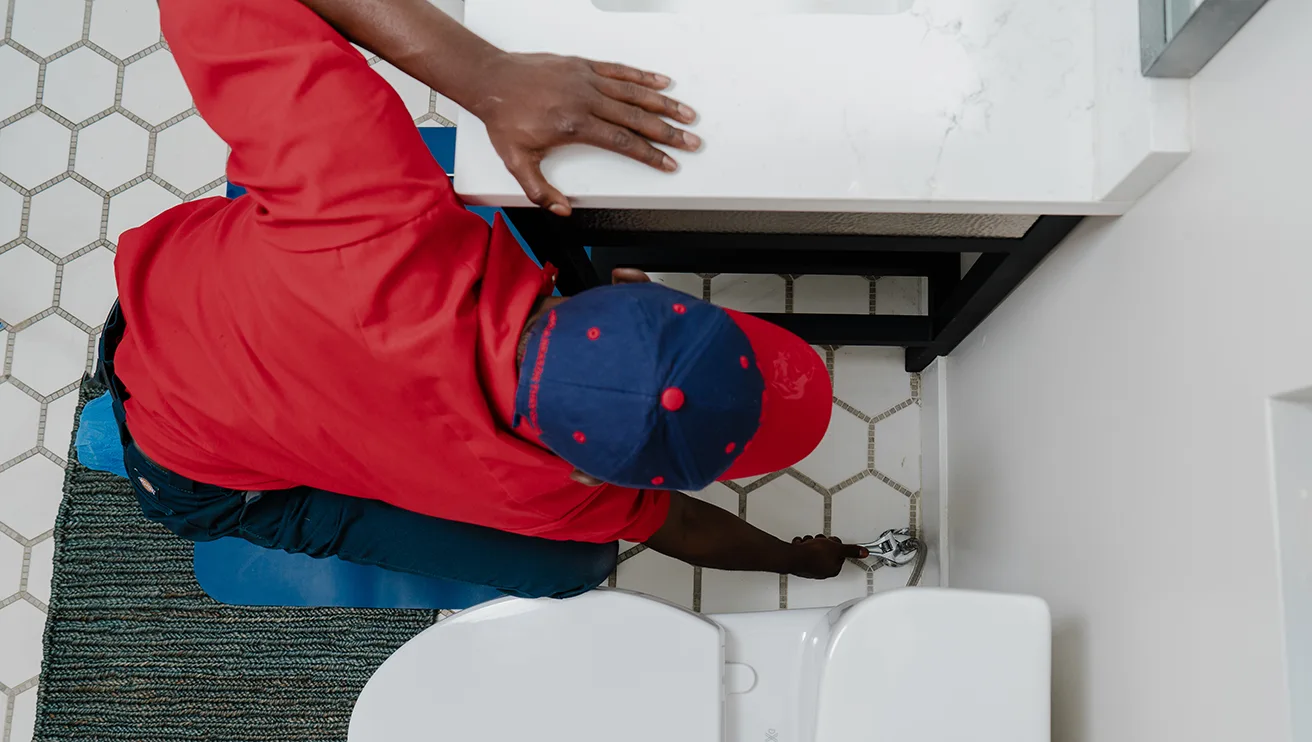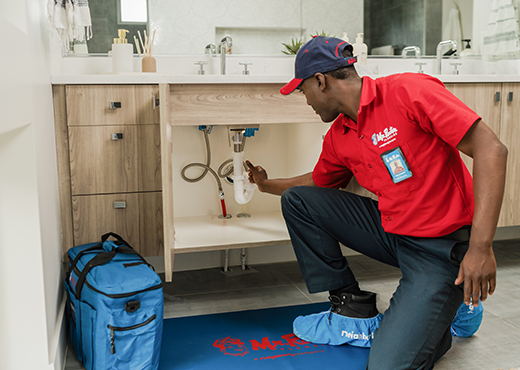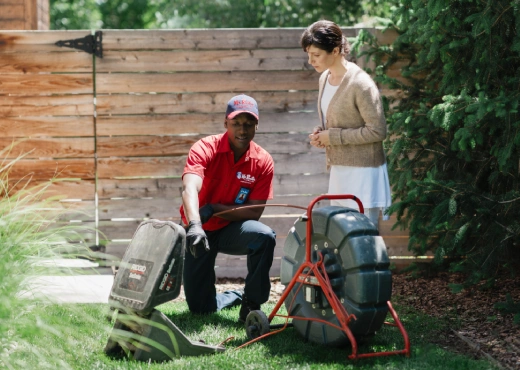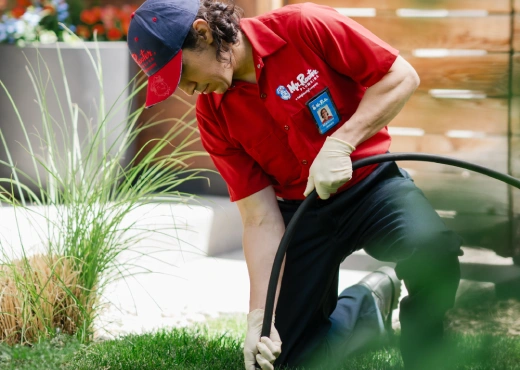
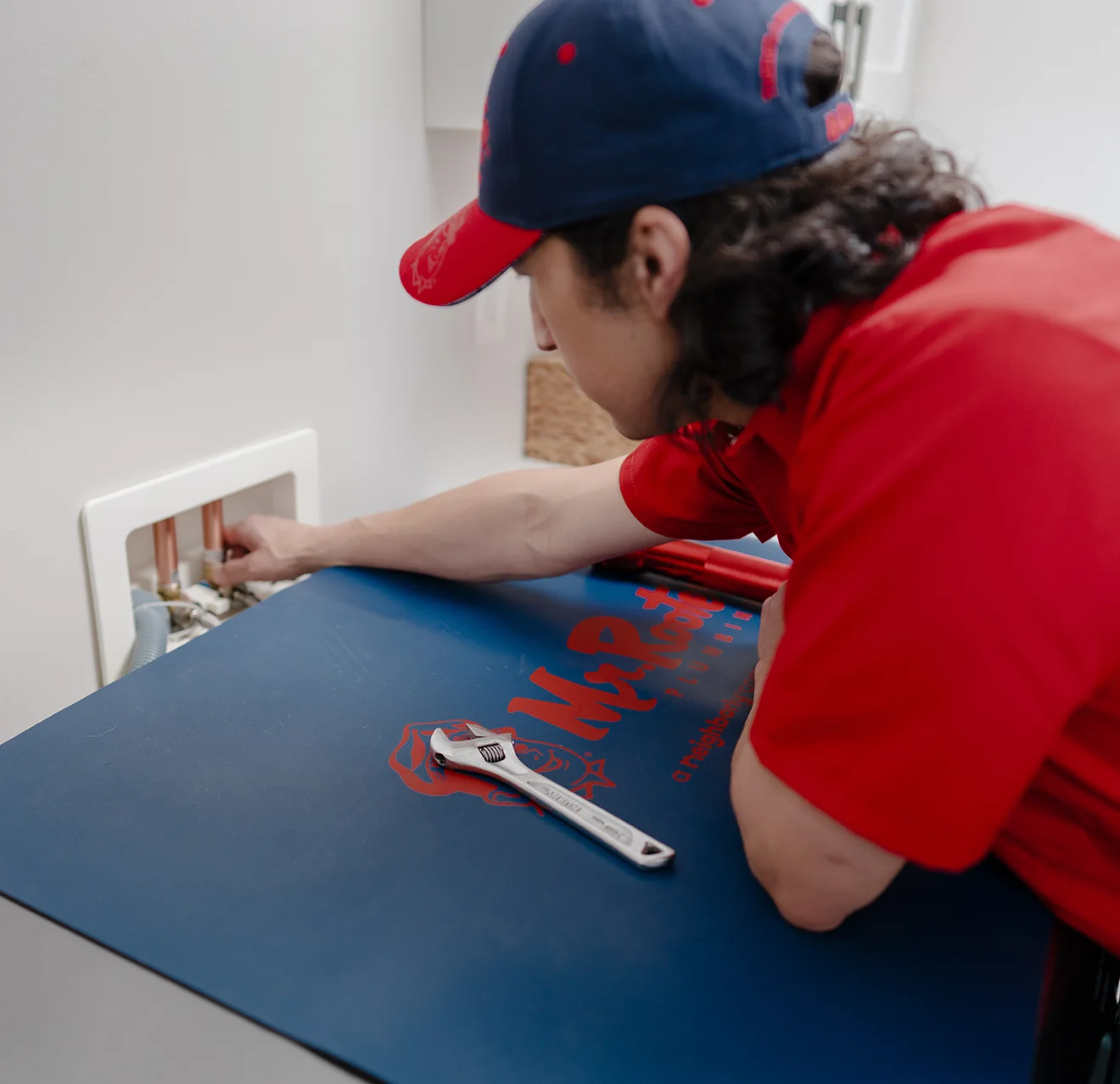
During your plumbing diagnosis inspection assessment and consultation appointment, our expert plumbers will proceed to install the backwater valve divide on your private sewer lateral. First, they’ll perform a sewer line inspection and pinpoint the appropriate location for the backwater valve. To cover their blindspots your technician will insert a small video camera attached to a flexible cable and LED light to record footage of your sewer cleanout.
In addition to this, they may use other innovative techniques like infrared detection to create a thermal map or acoustic listening to detect any potential leaks. Plus, if your sewer line is looking quite scrubby they may even advise you to sign up for a HydroScrub® Jetting service that utilizes a highly pressurized stream of water to clear away any leftover residue that may result in a clog. Secondly, after the pipes have been cleaned and cleared away and appraised for any damage like cracks we will proceed to the backwater valve installation. There are many different types of devices available on the market and after you choose your preference we will replace the pipe attached to the valve with new PVC piping. Next, we’ll add cleanout access to the valve. Lastly, we’ll fill the hole and attach a hose to the backwater valve so you can get easy access for future repairs.
Types Of Backwater Valves
- Check Valve: The most popular type seen in most residences consists of a flap and ball and blocks water from readily entering your home during heavy rainfall. It’s designed to prevent the backflow of liquid by opening up in a singular direction and diverting the flow of water in the correct direction. If the flow of water goes in the opposite direction the valve will automatically close to protect the piping, other valves, and pumps.
- Gate Valve: This is slightly more durable than a check valve; it has a flapper you can physically open or close, but it is pricier and more commonly seen in commercial or industrial buildings.
- Combination Valve: This contains a clamber and gate inflated with air. As soon as it encounters an excess amount of sewage water beyond the threshold level that gate will automatically close off. It’s the most expensive option but it’s also the least likely to become glitchy and gives you the most protection.
Maintenance Of Your New Device
On average your backwater valve should last around 5 years. As for proper upkeep, your backwater valves must be cleaned and maintained at least once per year to ensure smooth operation and it provides the full level of protection against a flash flood that can result in a sewage backup. Here are some DIY tips you can follow after your brand-new backwater device has been installed:
- Check the O-ring for signs of residue build-up or damage.
- Inspect the interior of the valve with a flashlight and get rid of any large blockages so it doesn't cause a clog. You can use a toilet brush to scrub away any debris.
- Remove and observe the flapper to check for any signs of sediment build-up or damage on its hinge and see if it can easily open and shut.