Every toilet installation we complete in Toronto follows a consistent, documented process. Here's what to expect when you call us.
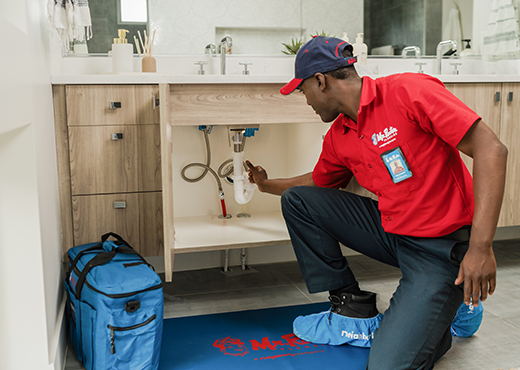
Your plumber arrives, inspects the existing toilet and floor flange, and provides a quote. If the closet flange is cracked, corroded, or sits too low relative to the finished floor (common in Toronto homes where tile has been added over the original subfloor), we flag it before it becomes a post-install problem. A damaged flange causes leaks at the base, odours, and eventual floor rot. We repair or replace it as part of the job, not as a surprise add-on.
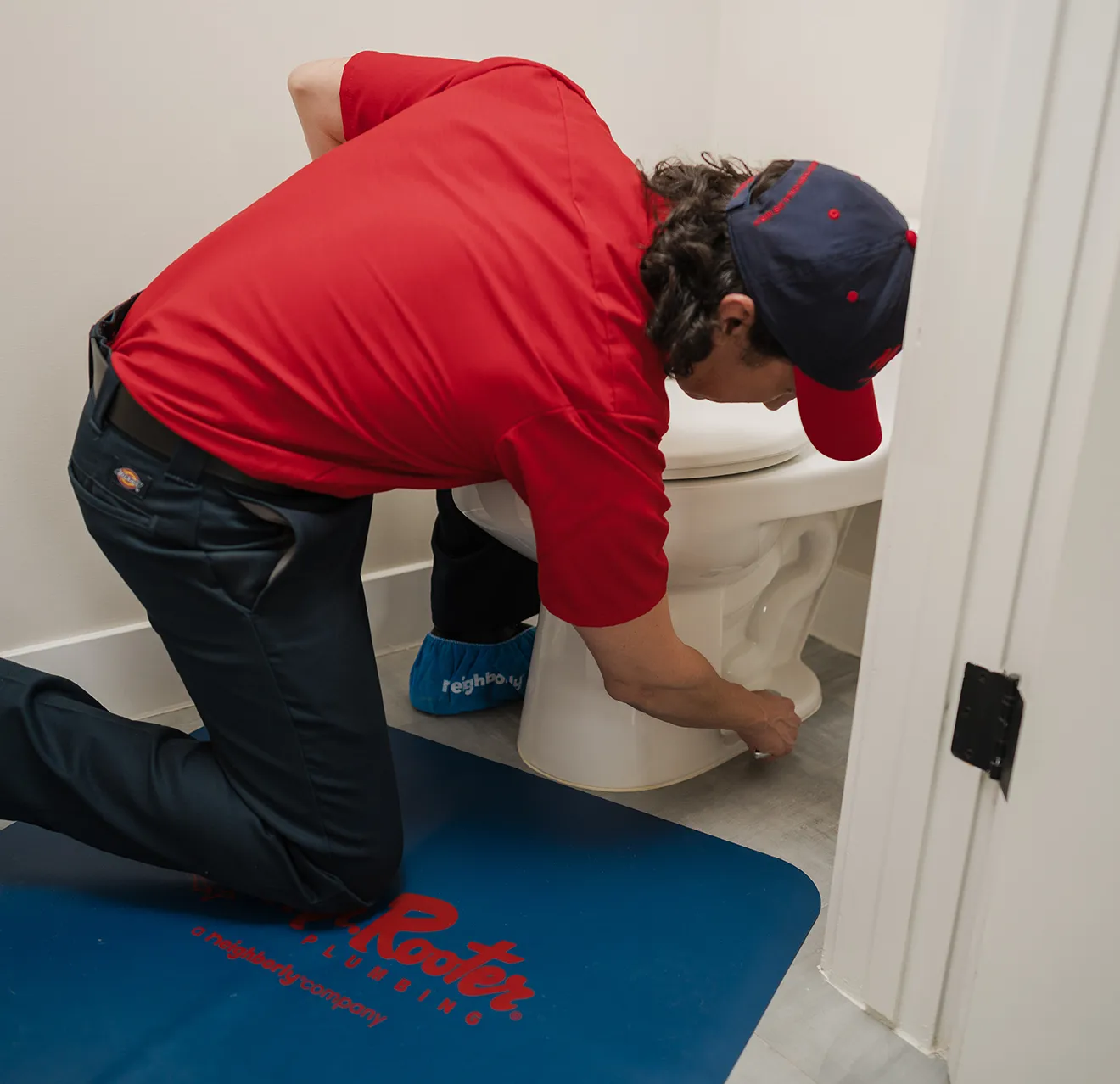
Once the quote is accepted, we shut off the water supply at the stop valve, flush to drain the tank and bowl, disconnect the water supply line, unscrew the base nuts, and lift the old toilet. The wax ring comes off, we clean and inspect the flange, and if it's sound, we install a new wax ring or wax-free seal. We lower the new bowl onto the flange bolts, press it into the seal, and level it. Overtightening the base nuts is one of the most common DIY mistakes, and it cracks the porcelain at the bolt holes. We snug them down properly. For a two-piece toilet, the tank goes on next with a rubber tank-to-bowl gasket and tank bolts. We reconnect the supply line, turn the water on slowly, and check the fill valve and flapper valve for proper operation. Then we caulk the base perimeter, do three test flushes, and check for any seepage at the base, the supply line connection, and the tank bolts.
Toronto homes with older cast-iron drain stacks sometimes have slight misalignment between the floor flange and the drain below. If we find that during removal, we correct it before installing the new toilet. Skipping that step can cause a toilet to rock after installation. We also inspect the shut-off valve under the tank while everything is disconnected. A stop valve that hasn't been fully opened or closed in 15 years often seizes. Replacing it during a toilet swap is far less disruptive than calling back for a separate valve job when it fails six months later. Our plumbers carry standard quarter-turn ball valves on the truck for exactly this reason.