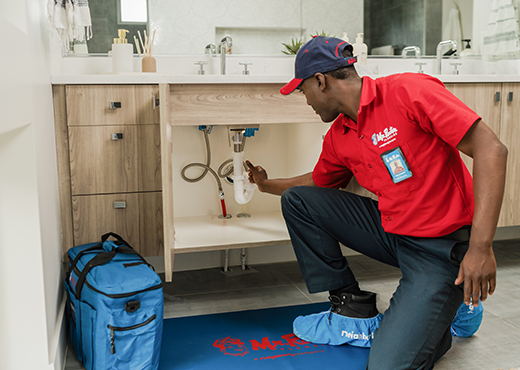

Ceiling water damage in a Toronto home almost always traces to a plumbing failure above, not the roof. Supply line failures are common in older housing stock. A pinhole in a copper fitting, a cracked joint under a bathroom sink, or a loose supply hose behind a toilet can drip for weeks. Water travels along drain pipes and joists, pools in low spots, and saturates drywall before it ever drips through. The source is often several feet from where the ceiling is wet.
A hot water tank leak is another common culprit. When a water heater weeps from the base or a fitting, water pools on the floor and seeps into the ceiling below. Drain pipe failures behave differently: a failed drain flange or deteriorating wax ring sends wastewater into the ceiling cavity. Untreated sewage damage creates a biohazard risk inside the ceiling beyond the drywall itself.
Condensation from a poorly vented bathroom exhaust fan or an inadequately insulated cold water pipe can drip without any pipe failing. In cold weather, inadequate attic ventilation leads to frost buildup that melts in spring and finds its way into ceiling assemblies.