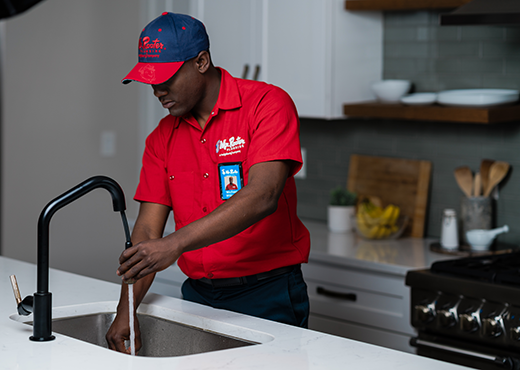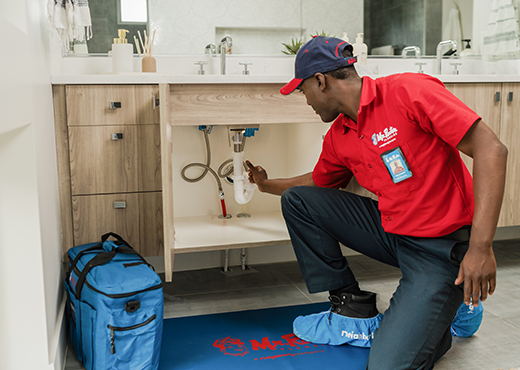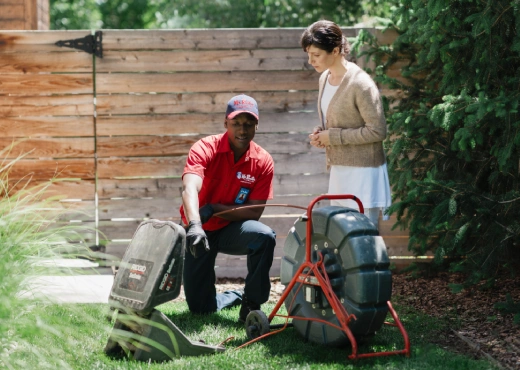

Getting the installation right from the start avoids failures caused by poorly located pits, improper venting, or undersized pumps. Here's how our licensed plumbers approach the job.
- Site Assessment: Before any digging starts, we confirm the ideal pit location. The pump pit needs to sit close to the fixtures it serves, with proper air circulation to prevent odour problems. We also confirm the discharge route to the main sewer line and whether the existing drain configuration works with the pump size required.
- Excavation and Pit Installation: We excavate the basin opening and set the pit, making sure it's level and sized correctly. The pit needs to be large enough for the pump, the float switch, and normal waste accumulation between pump cycles.
- Pump Placement and Anchoring: The pump gets secured to prevent movement during operation. A pump that shifts inside the pit can jam the float switch, which causes either constant running or failure to start when the pit fills.
- Piping Connections: Inlet lines from the basement fixtures connect to the pit. The discharge line runs from the pump up to the main sewer line. We apply Teflon tape at threaded joints and check every connection before testing. A check valve goes on the discharge line to prevent backflow when the pump cycles off.
- Venting: Sewage pits require a dedicated vent line to the outside. Without proper venting, sewer gas builds up, and the odour will come through the pit cover into the basement. This is a requirement under the Ontario Building Code, not optional.
- Testing and Sealing: We pour water into the pit to trigger the float switch and verify that the pump activates, moves the water, and shuts off cleanly. The pit cover gets sealed to contain any gases. We walk you through what you should hear during a normal pump cycle so you know what normal sounds like going forward.
For eligible residential plumbing services, ask us about 6-month installment payment and financing options with no interest, subject to credit approval.