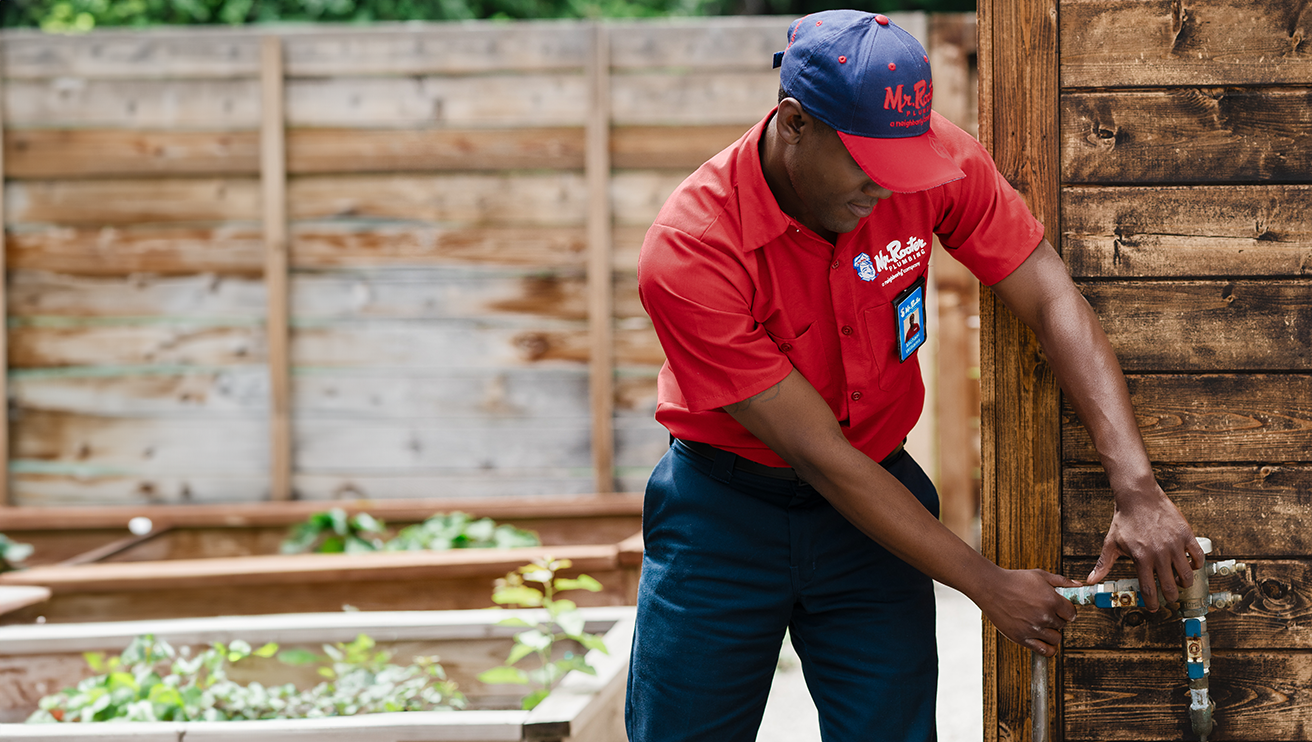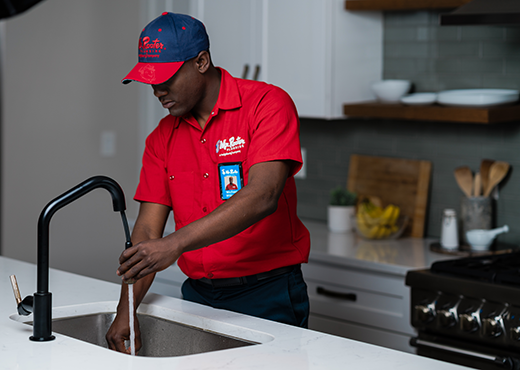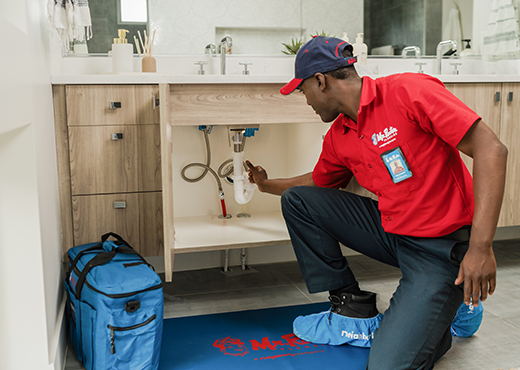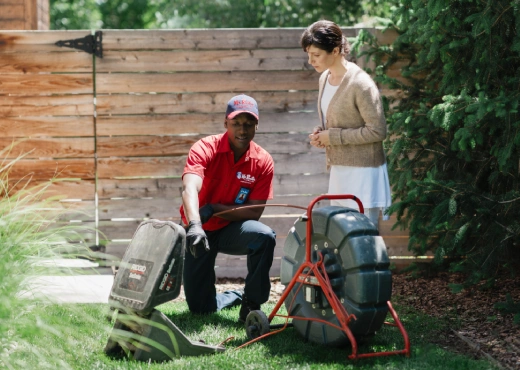

If you get water from a well or have an irrigation system, you must install a home backflow prevention device. Modern plumbing codes require backflow prevention devices to be installed anywhere cross-connections exist. When you do not install a backflow prevention device, you are at risk of unhealthy cleaning, cooking, and drinking water. Common appliances that require a backflow prevention device include:
- Sprinkler Systems
- Swimming Pools
- Garbage Disposals
- Faucets with Hose Attachments
- Dishwashers
- Toilets
How Does a Backflow Prevention Device Work?
A backflow prevention device prohibits wastewater from backing up into your water line. We offer multiple types of backflow preventer devices. The types of backflow prevention devices include the following:
Air Gaps – An air gap is commonly used in sinks to help prevent debris from entering your dishwasher or drinking water. Air gap devices prevent backflow issues with air gaps. They help eliminate the risk of contamination by separating the hose that dirty water flows through and the hose that runs to your drains. Many states require air gaps in dishwasher installations to ensure there is no cross-contamination.
Vacuum Breakers – Atmospheric vacuum breakers (AVB) help prevent backflow in the spigot, faucet, and hose applications. AVBs have a check valve that opens their air valve when it detects lost pressure. When the air vent is open, it breaks the vacuum and seals off the water supply. AVBs are required to be installed at least six inches above the ground.
Check Valves – Check valves to ensure water flows in only one direction. They open and shut depending on the pressure on each side of the valve. Check valves are typically installed at individual water outlets or the service entrance. They are designed for continuous pressure systems.