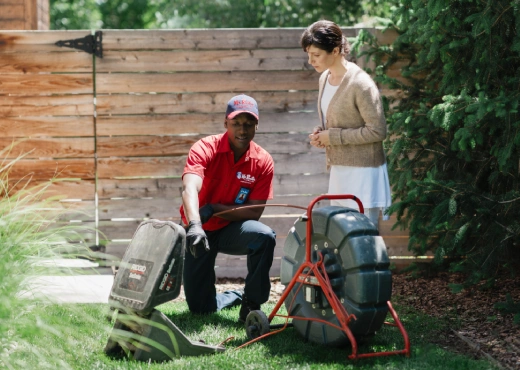
Our fully qualified plumbers begin every visit with a thorough camera assessment to inspect your sewage system and determine whether you are dealing with collapsed sewer lines, cracked sewer lines, or a simple clogged drain. We specialize in leak detection and repair of leaking pipes, addressing everything from clay or cast-iron pipes and metal sewer pipe to modern PVC sewer lines and concrete sewer lines. Using advanced sewer line inspections, we can determine whether your property requires a drain snake or drain snaking for a minor blockage, or whether more extensive drain replacements and a new drain line installation are necessary to repair a rusted sewer line or a persistent main sewer line clog.
We offer a wide range of plumbing solutions designed to save you time and money, such as trenchless drain line repair and trenchless relining, which allow for emergency sewer and drain repair without destroying your landscaping. For stubborn blockages in a shower drain, toilet drain pipe, or P-trap, our drain cleaning services utilize high-pressure hydro jetting to clear debris more effectively than standard DIY methods. As a premier commercial contractor and residential specialist, we are experts in navigating the local area's combined sewer systems, ensuring your stormwater and sewage are managed properly to prevent dangerous sewer gas from entering your home.
If we can salvage your underground sewer pipes, we will use a trenchless pipe repair method known as CIPP lining, short for Cured-In-Place Pipe lining, the industry term for this process. It is widely used across the Greater Toronto Area and is well-suited to the clay and cast-iron sewer laterals common in older Etobicoke neighbourhoods. Trenchless methods generally reduce surface disruption significantly compared to open-cut excavation, and total project time is shorter in most residential applications.
Etobicoke is a community with a significant mid-20th-century housing stock. Many homes in established neighbourhoods such as The Kingsway, Islington-City Centre West, Humber Valley Village, and Sunnylea were built in the 1950s and 1960s. Sewer laterals in those homes were typically installed using clay pipe, with sections joined by mortar or rubber gaskets. Over decades, Toronto's freeze-thaw cycles cause the surrounding soil to expand and contract. This shifts the joints, creating gaps where tree roots find moisture and grow inward. Once roots establish inside the pipe, they trap debris, restrict wastewater flow, and eventually cause full blockages or structural failure.
Cast-iron drain stacks in older homes corrode from the inside out. Wastewater is mildly acidic, and over time, that acidity eats through the pipe wall. You will not see this from the outside. By the time a cast-iron stack shows visible exterior rust or weeping, the interior wall is often paper-thin. Galvanized steel supply lines, also common in homes of that era, narrow from the inside as mineral deposits accumulate, which restricts water pressure throughout the home.
If your home is approaching or past the 50-year mark, a camera inspection is a sound investment, even if you have not experienced a backup yet. Catching a partially blocked or cracked lateral before it fails completely is far less disruptive and less costly than dealing with a sewage backup in a finished basement.
When a pipe is too far gone for relining, whether it has collapsed, fractured along multiple sections, or deteriorated beyond the point where a liner would hold, pipe bursting is the appropriate method for full sewer line replacement. Pipe bursting is far less invasive than traditional excavation. With pipe bursting, the old pipe is displaced rather than removed, which means minimal excavation and a faster completion timeline compared to traditional open-cut replacement.