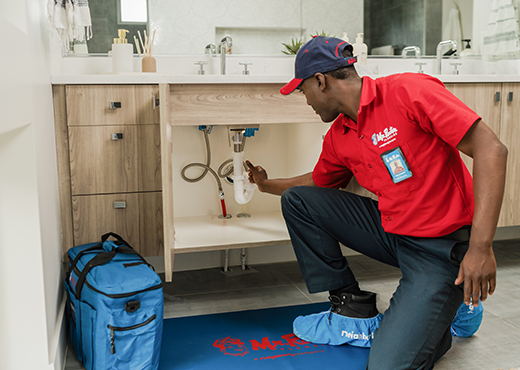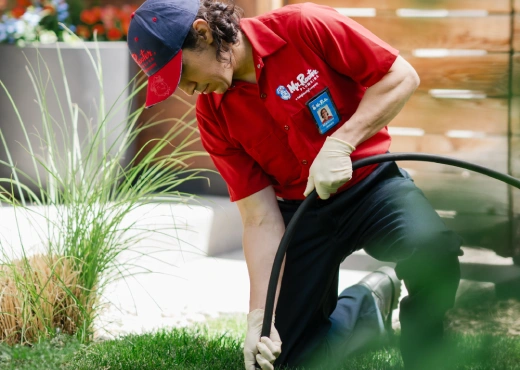

Diagnosis starts before the toilet comes off the floor. Your plumber runs a dye test in the tank to rule out a bad flapper valve or fill valve, since either can mimic a base leak by pooling water where the tank meets the bowl. If water tracks out from under the base, we close the shutoff valve and disconnect the stainless steel braided supply line before lifting the fixture.
With the toilet off, we scrape the old wax ring from the flange, check its height against the finished floor, and look for cracks or a broken ear where the closet bolts thread in. Homes from Thornhill's polybutylene era often pair an aging flange with older supply lines behind the wall. A cracked or low flange gets a repair ring or a stainless steel extender before anything goes back together.
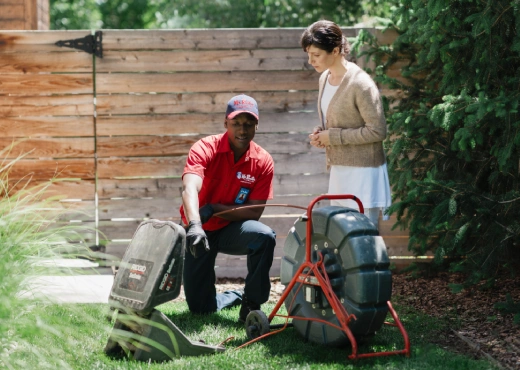
We set a new seal, lower the bowl onto new closet bolts, and check it with a level before running water and watching the base for several minutes. Moisture detection matters here: a leak that reappears after ten minutes usually traces back to the drainage connection rather than the seal. If a camera inspection finds a clogged drain or damaged sewer lines, we can move into drain cleaning or sewer line repair in the same visit. Let’s stop the leak before it reaches the subfloor!