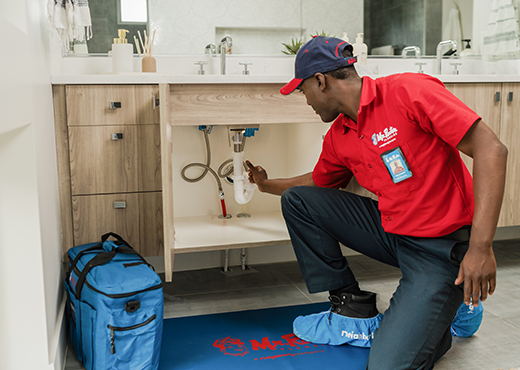

We shut off the water at the toilet's shutoff valve and drain the bowl and tank. Then we disconnect the water supply line and lift the toilet off the closet flange, the only way to see the old wax ring and subfloor underneath. Richmond Hill homes built before the 1990s around Mill Pond and Bayview tend to hide the worst surprises here: decades of slow seepage soften the plywood subfloor long before anyone notices water on the tile above.
Once the toilet's off, we inspect the closet flange for cracks and corrosion, then check whether it's sitting at the right height. A bathroom re-tiled since the toilet was last set often leaves the flange sitting too low, and that mismatch is why a fresh seal keeps failing within weeks. A flange extender or full replacement solves it for good, rather than stacking a second wax ring.
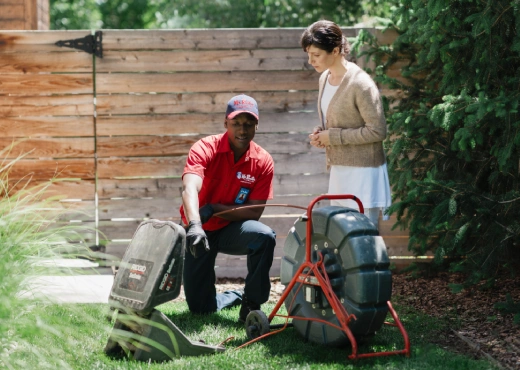
We reset new tee bolts finger-tight and torque them evenly so the porcelain base doesn't crack, then reconnect the supply line and shutoff valve. Wall-hung toilets get checked at the carrier frame instead of a flange. Smart toilets and touchless flush models have electronic components we disconnect first, and dual-flush units often need the fill valve retuned after. We finish with several flush cycles, watching the base and the shutoff valve for drips. Gurgling sounds or a lingering sewer smell downstream call for a video camera pipe inspection to find the real cause.