We start with site preparation and a look at your existing plumbing, gas lines, or electrical panel, depending on the type of unit going in. For gas water heaters, that includes checking the gas line diameter to confirm it can handle the unit's BTU demand. Undersized gas lines are one of the more common surprises in older homes, and catching that early keeps the job on schedule.
Once the site is ready, old unit removal comes next. We disconnect and haul out the existing hot water tank, clear the space, and mount the new unit to the wall. Tankless water heaters are compact, so the footprint shrinks considerably compared to what was there before.
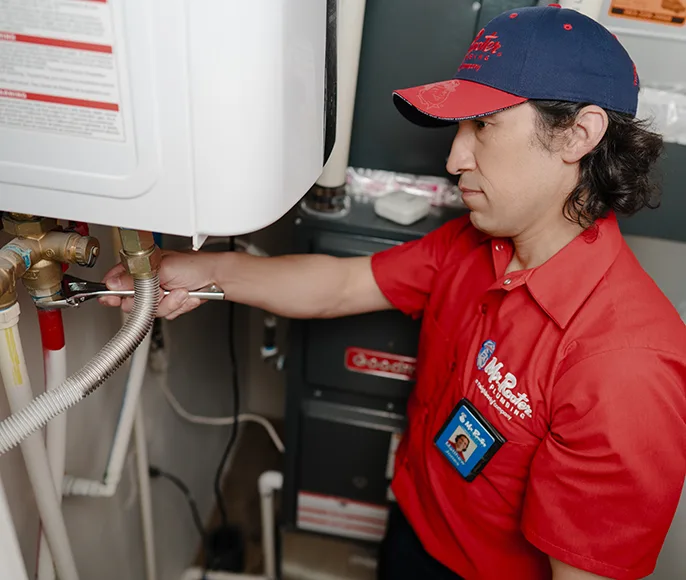
The connection work follows: gas line or electrical hookup, water supply lines in and out, and venting for gas models. Non-condensing units vent exhaust through a flue to the outside. Condensing units use a different venting setup that lets them recover more heat before the exhaust exits, which pushes efficiency higher. Before we leave, we run a full system test, confirm water flow and pressure at the fixtures, and check that the pressure relief valve is seated and functioning.