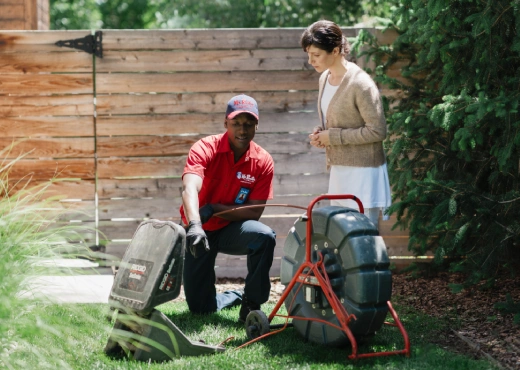
Guelph's sanitary sewer and storm sewer systems run as two separate networks in most newer subdivisions. However, many homes near the downtown core still tie into gravity sanitary sewers laid decades ago. Clay and early cast iron sewer mains shift with the clay-heavy soil common across the city, opening joints that tree roots exploit while searching for moisture. Once roots take hold in a cracked lateral, the blockage worsens until a plumber clears it with a cable machine or a pressurized jet of water. Fats, oils, and grease poured down a kitchen sink or garburator behave differently: they harden along the plumbing traps and the lateral running to the property line, narrowing the passage until wastewater backs up through the lowest fixture, usually a basement floor drain or toilet.
Heavy rain adds a second failure point. When storm drains and the storm sewer system fill faster than they can carry water toward the Speed River, older combined pipe sections can surcharge, pushing sanitary flow backward into homes without a backwater valve. The City of Guelph treats sanitary wastewater, and sewage pumping stations lift flow from low-lying subdivisions where gravity alone will not carry it far enough. Everything from the water pipe entering the house to the sewer cleanout at the property line is the homeowner's responsibility.
Winter adds urgent repairs of its own. Frozen pipes can crack a water pipe or water heater supply line, and burst pipes paired with a blocked main can turn a routine repair into active flooding. Homes on private wells and septic systems in Eramosa, Puslinch, and West Montrose face a related but distinct risk, since a failing septic bed can push sewage back through the same fixtures. Whatever the cause, professional sewage cleanup, sewer line replacements, and trenchless sewer line repair limit the damage without tearing up the yard.