
Brantford's housing stock tells a specific story. Neighbourhoods like Eagle Place, Holmedale, and East Ward developed heavily during the 1950s and 1960s, and many of those homes still carry their original drain infrastructure. Cast iron drain stacks corrode from the inside out as decades of wastewater eat away at the metal walls. Clay tile sewer laterals crack at the mortar joints as clay soil shifts through Ontario's freeze-thaw cycles, and once those cracks open, the tree roots do the rest.
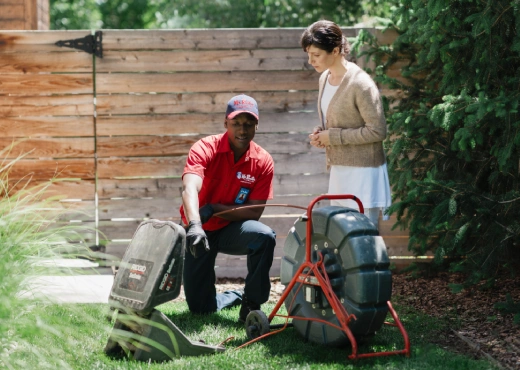
The Grand River supplies Brantford's municipal water, and that water is moderately hard, picking up calcium and magnesium from the limestone bedrock as it flows through. Over time, that mineral content builds up inside pipes, narrowing the flow channel and worsening partial blockages. Hydro jetting can clear the scale, but first you need to know where it's concentrated and whether the pipe wall can handle the pressure, which is exactly what a drain camera inspection establishes.
Homes built in the 1970s through mid-1990s in areas like West Brant introduce a different concern: polybutylene (poly-B) supply lines. Poly-B degrades from the inside as municipal chlorine attacks the pipe wall, causing brittle sections and fitting failures that aren't visible without camera inspection.