
Fixing a leak at the base starts at the shutoff valve, not the gasket. We shut off the water, drain the tank and bowl, and pull the fixture completely off the flange. A cracked seal rarely explains the whole problem on its own: tee bolts corrode, the flange can crack or sit too low against the subfloor, and a slow leak from the flush lever, fill valve, or float bowl can mimic a base leak by running down the outside of the bowl instead of underneath it. We check the plumbing system first.
Once the fixture is off, we inspect the closet flange for cracks, confirm it sits flush with the finished floor, and replace it if chipped or corroded. We install a new gasket, torque the tee bolts evenly, and reconnect the water line. A blocked vent pipe can disrupt the siphon jet and slow the water flow enough to look like a phantom leak, so we don't skip the plumbing vents either. Then we run a second dye test and watch the base through several flush cycles.
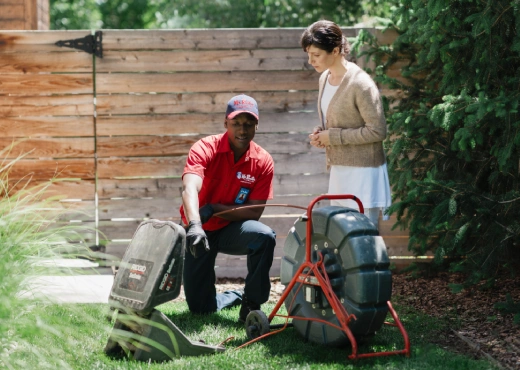
If water damage has already reached the subfloor, we handle that repair too. A clog further down the drain line that pushes water back past the seal is more likely a clogged toilet repair than a failed gasket, and a plumbing snake or toilet auger clears it before we reset the fixture, with a quick video camera inspection down the sewer line if the pattern still doesn't add up. In winter, frozen pipe repairs sometimes overlap with this call when a cracked supply line leaks at the valve too, and if water has reached the floor joists, we loop in basement waterproofing before closing the wall back up. Fixing the seal usually pays for itself through real water savings on the bill.