A clog left alone doesn't stay a clog. Left long enough, pressure builds behind the blockage and a pipe eventually gives, and that's when a routine annoyance turns into a sewage backup. Your drains exist to move wastewater out of the house to the sewer lateral. Once that path is compromised, the water has to go somewhere, and it's rarely somewhere convenient.
Calgary's freeze-thaw cycle makes this worse than it would be in a milder climate. Repeated freezing and thawing stresses buried lines in a way a stable climate never would. A pipe that's already weakened by age or root intrusion can crack under that stress in a single hard winter, and the crack often doesn't show itself until the spring thaw when meltwater finds the new opening. Older Calgary neighbourhoods carry an extra layer of risk here. Homes built before the 1980s often still have original clay or cast iron drain lines, and neither material was designed to last a century. Clay cracks under root pressure. Cast iron corrodes from the inside until the pipe wall thins out and eventually fails. Neither gives much warning before it goes.
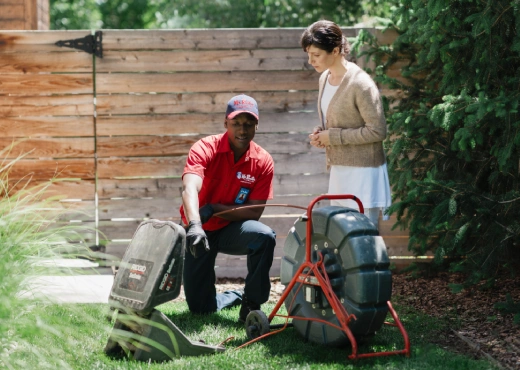
None of this happens overnight. A slow drain, an odd gurgling sound, or a faint sewer smell near a floor drain are all early warnings. Catching one of these signs and calling early usually means a straightforward repair. Waiting until the pipe fails outright usually means an emergency call, torn-up flooring, and a much bigger job than it needed to be. Most homeowners who put off a small drain repair end up paying for the same problem twice: once in the delayed damage, and again in the repair itself. Regular drain cleaning and an occasional camera check are the cheapest insurance you can buy for the pipes you can't see. It's a lot easier to schedule a Tuesday morning inspection than to deal with a Saturday night flood.